An engagement ring can feel completely different depending on how its center stone is framed. Diamond halo engagement rings place smaller stones around the main diamond, creating a defined border that adds brilliance and visual presence. The design can look classic, modern, delicate, or bold based on the shape and setting.
A beautiful halo ring is not simply about adding more sparkle. Proportion, metal choice, stone quality, and daily comfort all affect how the finished ring looks and wears.
What Gives Diamond Halo Engagement Rings Their Distinctive Look?
A halo consists of smaller diamonds arranged closely around a center stone. These accent stones reflect light around the main diamond and create a larger visual outline. From a distance, the center and surrounding stones can appear almost like one bright surface.
The effect depends heavily on proportion. A fine halo can highlight the center without competing with it. A wider halo makes a stronger statement and may give the ring a more dramatic appearance.
Some designs use a single row of accent stones, while others feature double halos. Hidden halos offer another approach. They place small diamonds beneath the center stone, adding detail that becomes more visible from the side.
Center Stone Shape Changes the Entire Design
The shape of the center diamond influences the character of a halo ring. Round stones create symmetry and work naturally with circular halos. Oval diamonds can provide an elongated appearance while keeping the soft curves associated with traditional styles.
Emerald and radiant cuts bring sharper lines to the design. Their rectangular profiles often pair well with structured halos and clean metalwork. Cushion-cut stones sit between these styles because their softened corners can support both vintage and contemporary settings.
Pear and marquise shapes require more careful halo construction. Their pointed ends need protection, and the surrounding stones should follow the center shape without making the outline appear bulky.
Matching the Halo to the Center
A halo does not always need to copy the exact shape of the center stone. A cushion-shaped border around a round diamond, for example, can create a different silhouette while preserving the brilliance of the center.
The gap between the center stone and halo also matters. A tight arrangement creates a unified appearance. More visible separation makes each design element easier to distinguish.
Metal Choice Affects More Than Color
The setting metal creates the background for every stone in the ring. White gold and platinum provide a cool-toned appearance that can blend visually with colorless diamonds. Yellow gold introduces warmth and stronger contrast.
Rose gold adds a soft pink tone that can give a halo design a romantic character. Some rings also combine metals. A white metal head may hold the diamonds while yellow or rose gold forms the band.
Practical factors deserve attention as well. Platinum is dense and naturally white, while white gold is usually alloyed and commonly finished with rhodium plating. That finish may require maintenance as it wears over time.
Diamond Quality Across the Ring
The center stone usually receives the most attention, but the smaller halo diamonds also influence the finished appearance. Accent stones that are reasonably consistent in size and appearance help create a smooth border.
Cut quality is especially significant because it affects how a diamond handles light. A well-cut center stone can appear lively without relying only on carat weight. The surrounding stones should support that effect rather than create an uneven pattern.
Buyers may also consider man made diamonds for the center, halo, or both. These diamonds have the same crystal structure as mined diamonds, although their origin and production process differ. Comparing grading information can help buyers evaluate individual stones rather than relying only on their source.
Setting Styles and Their Practical Differences
Prong settings are common because they use small metal supports to secure diamonds while leaving much of each stone visible. Fine prongs can create an airy appearance, but their condition should be checked periodically.
Bezel settings surround all or part of a stone with metal. They can create smooth edges and provide additional protection, though they usually show more metal around the diamond.
Pavé settings use rows of tiny diamonds held close together with small beads or prongs. They are often used on the band to continue the sparkle beyond the halo.
The right setting depends partly on lifestyle. Someone who frequently works with their hands may prefer a lower profile and fewer exposed details.
Band Width and Proportion Matter
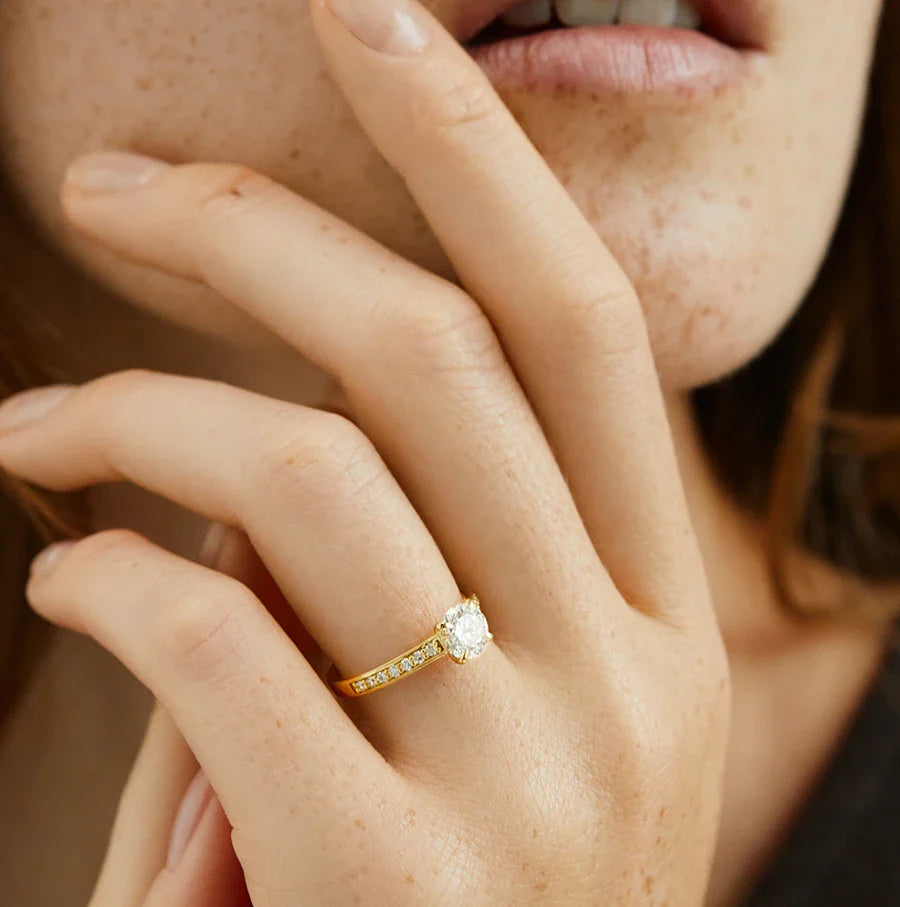
The band plays a major role in the balance of diamond halo engagement rings. A very thin band can make the center setting appear larger, while a wider band gives the design more visual weight.
Diamond-set bands extend the brilliance around the finger. Plain metal bands place greater focus on the center arrangement and may offer a simpler appearance.
Comfort should remain part of the decision. Very detailed bands may feel different between the fingers, especially if diamonds or metalwork extend far around the shank.
Think About the Wedding Band Early
An engagement ring does not exist in isolation if it will later be paired with a wedding band. Some halo settings sit high enough for a straight wedding band to fit closely beside them. Others extend outward near the finger and create a small gap.
A curved or contoured wedding band can follow the engagement ring’s shape. Trying both rings together before making a final choice helps reveal how the combined width, height, and proportions will feel.
Size Appearance Versus Carat Weight
One reason halo settings remain popular is their ability to create greater visual coverage. The surrounding stones expand the visible outline without changing the actual carat weight of the center diamond.
That does not mean a larger halo is always better. If the accent stones are too large, they may distract from the center. A balanced design keeps the main diamond visually dominant while using the halo to frame it.
Face-up dimensions can also differ among diamonds with similar carat weights. Looking at actual measurements alongside carat weight provides a clearer sense of how large a stone may appear.
Everyday Wear Should Influence the Choice
A ring that looks impressive in a display case still needs to work comfortably in daily life. High-profile settings can catch on clothing or gloves. Intricate halos may also have more small spaces where lotion, soap, and debris can collect.
Cleaning the ring regularly helps maintain its appearance. Gentle methods recommended for the specific metal and gemstones are preferable to aggressive cleaning techniques. Professional inspections can also identify loose stones or worn prongs before they become larger problems.
Insurance may be worth considering for a valuable engagement ring. Keep purchase documents, grading reports, and appraisals organized in case they are needed later.
Personal Style Matters More Than Trends
Halo designs offer enough variety to suit very different tastes. A round center with a delicate halo can feel traditional, while geometric shapes and clean settings can create a more contemporary look.
Vintage-inspired rings may use milgrain edges, intricate metalwork, or distinctive stone arrangements. Minimal versions keep the halo narrow and pair it with a simple band.
The most useful question is not which style is currently popular. Consider which details will still feel comfortable and appealing years from now.
A Ring That Balances Beauty and Practicality
A successful halo ring brings several details together. Center stone shape, halo proportions, setting height, metal, band width, and wedding-band compatibility all influence the final result. Daily habits should also guide decisions about exposed stones and intricate details.
Buyers interested in man made diamonds can apply the same careful approach to cut, grading, proportions, and setting quality. Taking time to compare complete rings, rather than focusing on one feature, makes it easier to select a design that looks balanced and remains practical for everyday wear.